


Sun Transits from Vrishabha (Taurus) to Mithuna (Gemini): A Historical Study of Nifty’s Behaviour
Executive Summary
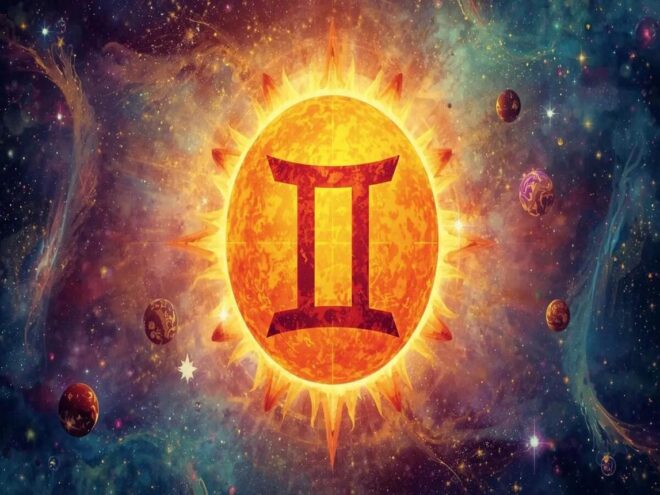
On 15 June 2026, the Sun moved from Vrishabha (Taurus) to Mithuna (Gemini), a transit known in Vedic astrology as Mithuna Sankranti. This year’s event is particularly noteworthy because it occurred alongside:
- 🌑 New Moon
- 🌍 Near Perigee (Super New Moon effect)
- ☀️ Sun entering Gemini
- ♊ Double Gemini activation (Sun + Moon)
- 🌟 Mrigashira Nakshatra influence
The Sun entered Gemini around midday IST and remains there until mid-July. Gemini is ruled by Mercury, bringing themes of communication, information flow, speculation and faster market participation.
Historical Market Observation
What Happens to Nifty Around Mithuna Sankranti?
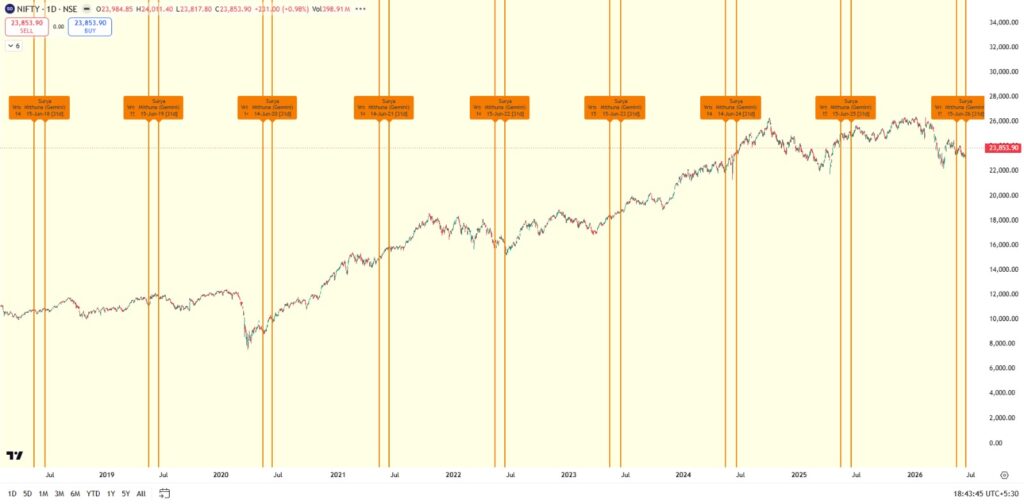
After reviewing historical June market behaviour and the astrological significance of Mithuna Sankranti, an interesting pattern emerges:
| Phase | Typical Market Behaviour |
|---|---|
| 3 Days Before Transit | Consolidation or exhaustion |
| Transit Day | Gap move or sentiment shift |
| 3–7 Days After Transit | Directional expansion |
| Sun in Ardra (around June 21-22) | Increased volatility |
| Sun in Punarvasu (early July) | Stabilization |
This is not a mechanical rule, but a recurring behavioural tendency observed by many astro-market analysts.
Why This Transit Matters More Than Most
Taurus Energy (Previous Month)
During the Sun’s stay in Taurus:
- Capital preservation
- Slow accumulation
- Defensive positioning
- Banking and value sectors
Gemini Energy (Current Month)
After entering Gemini:
- Information-driven moves
- Higher trading activity
- Rotation between sectors
- Increased speculative participation
- Faster trend changes
Gemini is ruled by Mercury, and Sun-Mercury combinations historically coincide with increased market responsiveness to news, government announcements and global developments.
Astro Timeline for Traders
Phase 1: Mrigashira
15–20 June
📌 Search Phase
Market Characteristics:
- Price discovery
- Testing highs and lows
- Sector rotation
- Confusion about trend direction
Trading Implication
Avoid assuming the first move is the final move.
Phase 2: Ardra
21 June – 4 July
📌 Storm Phase
Ardra is ruled by Rahu.
Historically this phase often produces:
- Sharp volatility
- News shocks
- False breakouts
- Fast directional moves
Trading Implication
This is usually the most dangerous and profitable segment of the transit.
Phase 3: Punarvasu
5 July – 15 July
📌 Recovery Phase
Characteristics:
- Trend confirmation
- Mean reversion
- Pullback completion
- Stronger directional clarity
Trading Implication
Many large trends reveal themselves during this stage.
Nifty Historical Tendencies Around Mid-June
Bullish Cases
When Nifty is already above major moving averages before Mithuna Sankranti:
✅ Momentum tends to accelerate
✅ Breakouts receive confirmation
✅ Banking sector often leads
Bearish Cases
When Nifty enters Mithuna Sankranti below key support:
❌ Volatility increases
❌ Sharp rallies fail
❌ News-driven whipsaws dominate
Panchasutra Market Conclusion
Grade of Event: ⭐⭐⭐⭐⭐
The June 2026 Mithuna Sankranti is stronger than a normal monthly Sun ingress because it occurred simultaneously with:
- Sun entering Gemini
- New Moon
- Perigee Moon
- Mercury activation
- Beginning of a new lunar cycle
This creates a rare “Double Gemini Reset Window.”
My Astro-Market Roadmap
| Date | Importance |
|---|---|
| 15 June | Primary Trigger |
| 17–19 June | Confirmation Window |
| 21–22 June | Ardra Volatility Window |
| 28–30 June | Secondary Cycle Point |
| 5–6 July | Punarvasu Reversal Window |
Final Thought
For a Panchasutra trader, the most important message is not whether Mithuna Sankranti is bullish or bearish. The historical lesson is that it often marks a change in market character.
Vrishabha builds the move. Mithuna reveals the move.
That is the key idea worth tracking on Nifty and Bank Nifty over the next 30 days.